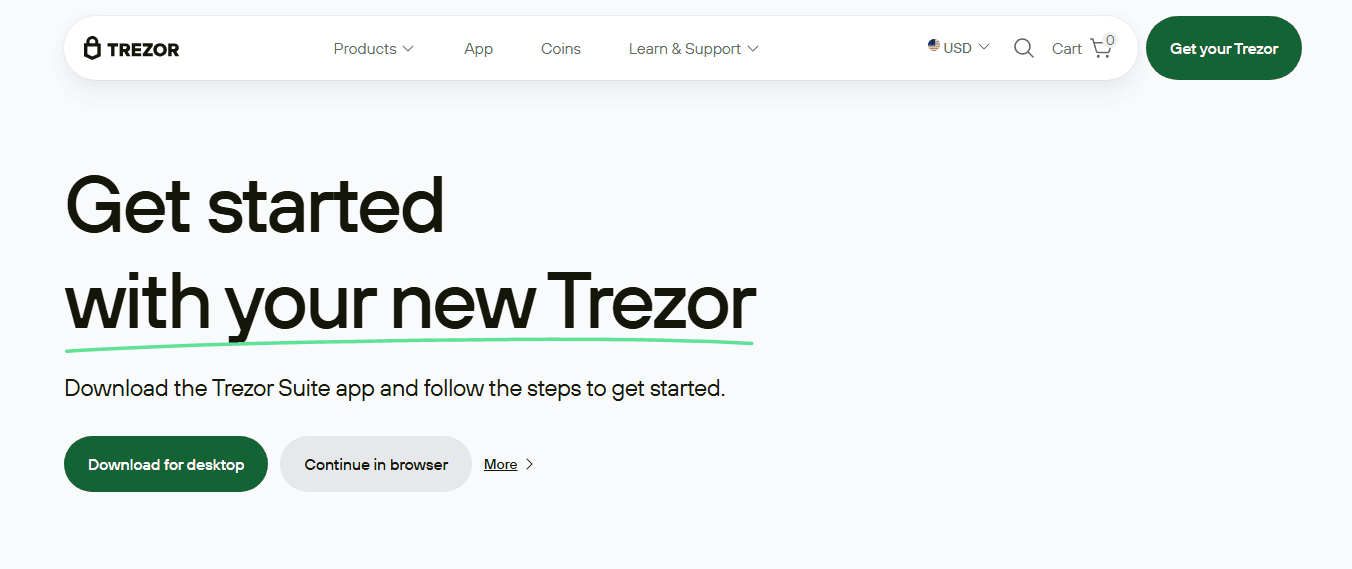
Trezor.io/start: Step-by-Step Guide to Setting Up Your Trezor Hardware Wallet
Cryptocurrency ownership comes with responsibility. Unlike bank accounts or traditional payment apps, losing access to your wallet can mean losing all your funds permanently. This is why Trezor, one of the leading hardware wallet providers, emphasizes a secure setup process through Trezor.io/start. Following this process ensures that your digital assets remain protected from hackers, phishing attempts, and human error.
This guide provides a comprehensive overview of Trezor.io/start, explains why it is important, and walks you through each step of safely initializing or restoring your Trezor wallet.
What Is Trezor.io/start?
Trezor.io/start is the official onboarding platform for all Trezor hardware wallets. It acts as a trusted starting point for setting up a new device or recovering an existing wallet.
The page provides:
Verified instructions for initializing Trezor wallets
Download links for the official Trezor Suite application
Guidelines on creating or restoring wallets securely
Educational material on recovery phrase management and best security practices
Using Trezor.io/start ensures you avoid malicious downloads, phishing websites, and fake wallet applications.
Why Trezor Has a Dedicated Setup Page
The cryptocurrency ecosystem is rife with scam websites and imitation wallet software. New users are particularly vulnerable when setting up a hardware wallet for the first time.
Trezor.io/start exists to:
Guarantee installation of genuine software
Guide users through secure wallet creation
Educate users about recovery phrase safety
Verify device authenticity and firmware integrity
Following this official guide minimizes the risk of losing funds during initial setup.
Introduction to Trezor Hardware Wallets
Trezor hardware wallets are physical devices that store private keys offline, keeping them away from potential online threats. These devices act as your personal vault for cryptocurrencies.
Key features of Trezor wallets include:
Offline generation and storage of private keys
Secure transaction signing using physical buttons
Open-source firmware and software for transparency
Multi-currency support across hundreds of cryptocurrencies
Recovery phrase backup for restoring funds on new devices
By combining physical security with software management via Trezor Suite, users gain full control over their crypto assets.
Supported Devices on Trezor.io/start
Trezor.io/start supports setup for all current Trezor models, including:
Trezor Model One – the classic model with basic features
Trezor Model T – the premium model with touchscreen and advanced security
Each device follows the same core principles of offline key storage and user verification, while the user interface and features vary slightly.
Step-by-Step Guide to Setting Up a Trezor Wallet
Step 1: Access Trezor.io/start Safely
Open a web browser and manually enter Trezor.io/start. Avoid clicking links from emails, social media, or advertisements to prevent phishing attempts.
Step 2: Select Your Trezor Model
Choose between Model One or Model T. Device-specific instructions and downloads will appear.
Step 3: Download Trezor Suite
Trezor Suite is the official management software. Download it for your operating system (Windows, macOS, Linux).
Step 4: Install and Launch Trezor Suite
Follow the installation instructions and open the application to begin device setup.
Step 5: Connect Your Trezor Device
Use the supplied USB cable (or Bluetooth for Model T) to connect your hardware wallet.
Step 6: Install or Update Firmware
Trezor Suite will guide you through installing the latest firmware. Never skip updates—they ensure security and device integrity.
Step 7: Create a New Wallet or Restore Existing Wallet
Choose whether you want to create a new wallet or restore a wallet using a recovery phrase.
Step 8: Backup Your Recovery Phrase
The device will display a 12-, 18-, or 24-word recovery phrase. Write it down exactly as displayed. Store it offline in multiple secure locations.
Step 9: Confirm the Recovery Phrase
Trezor will ask you to confirm selected words to verify that you recorded the recovery phrase correctly.
Step 10: Complete Device Setup
Once confirmed, your Trezor wallet is ready for use. You can now send, receive, and manage cryptocurrencies securely.
Understanding the Recovery Phrase
The recovery phrase is the master key to your wallet. It allows full access to your funds even if your device is lost, stolen, or damaged.
Critical tips:
Never store your recovery phrase digitally
Never share it with anyone
Never enter it into websites or apps
Use it only to restore a wallet on a Trezor device
Loss or compromise of the recovery phrase can result in permanent loss of funds.
Trezor Suite: The Official Management Software
Trezor Suite provides a secure and user-friendly interface for managing your wallet. Through Trezor Suite, users can:
View balances across supported cryptocurrencies
Send and receive digital assets
Manage multiple accounts and cryptocurrencies
Track portfolio performance
Swap cryptocurrencies with integrated services
Update Trezor firmware safely
All sensitive actions require confirmation on the physical device, keeping private keys offline.
Supported Cryptocurrencies
Trezor hardware wallets support a wide range of cryptocurrencies, including but not limited to:
Bitcoin (BTC) and forks
Ethereum (ETH) and ERC-20 tokens
Litecoin (LTC)
Dash, Zcash, and other altcoins
Select DeFi and NFT-compatible assets
Support for additional tokens is regularly updated in Trezor Suite.
Common Setup Challenges and Solutions
Device Not Detected
Use the original USB cable
Try a different USB port
Restart Trezor Suite
Avoid USB hubs
Firmware Update Issues
Ensure a stable internet connection
Do not disconnect the device during updates
Restart the setup process if necessary
Recovery Phrase Mistakes
Carefully check spelling and word order
Reset the device and start over if errors persist
Scam Awareness and Trezor.io/start
Phishing attacks and fake Trezor support messages are common. Remember:
Trezor will never ask for your recovery phrase online
There is no online login for Trezor wallets
Support will never request your private keys
Any message requesting sensitive information should be considered fraudulent.
Comparing Trezor Hardware Wallets and Software Wallets
FeatureTrezor Hardware WalletSoftware WalletPrivate Key StorageOfflineOnlinePhysical Transaction ConfirmationRequiredNot requiredExposure to HacksVery lowHighUser ControlFullPartialBackup MethodRecovery PhrasePassword or cloud backup
Hardware wallets combined with Trezor.io/start provide the most secure method of managing cryptocurrency.
Best Practices After Setup
Keep recovery phrase offline and secure
Always verify transaction details on the device screen
Keep firmware and Trezor Suite updated
Avoid public computers
Ignore unsolicited crypto-related messages
Physically secure your Trezor device
Who Should Use Trezor.io/start?
Beginners who want a safe first wallet
Long-term investors storing crypto for years
Users managing multiple cryptocurrencies
Privacy-focused individuals seeking self-custody
Anyone leaving centralized exchanges
Trezor.io/start is designed to guide all types of users safely.
Why Following Trezor.io/start Matters
Errors made during wallet setup can result in permanent loss of funds. By following Trezor.io/start:
You ensure authentic software installation
Your wallet and firmware are verified
Recovery phrases are handled securely
Long-term safety of assets is maintained
Conclusion
Trezor.io/start is more than just a setup page—it is the gateway to secure cryptocurrency ownership. By guiding users through verified software installation, device initialization, and recovery phrase management, Trezor.io/start provides confidence and security in an ecosystem where mistakes can be costly.